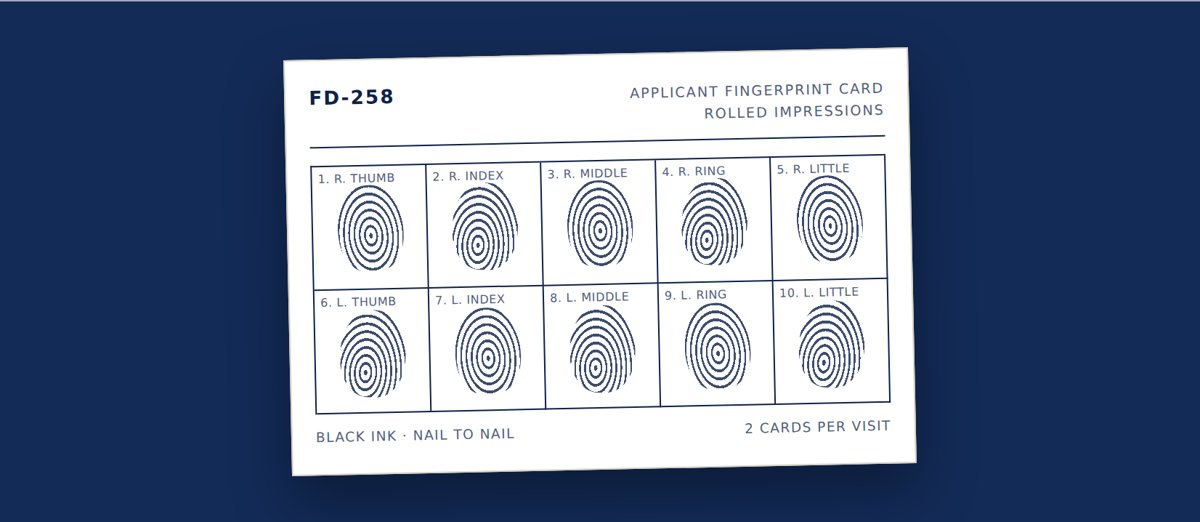
Ink fingerprint cards look almost the same at a glance: a block of personal details at the top and boxes for your prints at the bottom. But agencies are strict about which card they accept, and the wrong one can send your application back.
FD-258: the FBI applicant card
The FD-258 is the card most people need. Out-of-state licensing boards use it for nurses, physicians, pharmacists, teachers and many other professionals. Employers and agencies that process fingerprints by mail use it too.
If your instructions say "FD-258," "applicant card" or "hard card," this is the one.
FD-1164: your own FBI record
The FD-1164 is for requesting your own FBI Identity History Summary. People usually need it when another country asks for an FBI background check for a visa, residency, school or a job abroad. Some people also use it to review their own record.
If the check is going overseas, it may also need a federal apostille from the U.S. Department of State.
SF-87: federal jobs
The SF-87 is the federal government's fingerprint chart. Federal agencies use it for employment and background investigations. If you're starting a federal job or contract and your agency asks for ink prints, check whether it names the SF-87.
State BCI cards
Some states have their own card from the state Bureau of Criminal Investigation. Ohio, for example, asks out-of-state applicants to send a BCI card along with an FBI card. These usually come from the state agency, so have yours ready before your appointment.
Our advice
- Read your instructions for the card name. When in doubt, call the agency that asked for prints.
- Use the cards your agency sent you. They may carry an agency number it needs.
- Don't sign ahead of time. Leave the signature lines blank until your appointment.
We carry blank FD-258, FD-1164 and SF-87 cards and roll your prints in black ink at your home, office or school, anywhere in Brooklyn and the five boroughs.